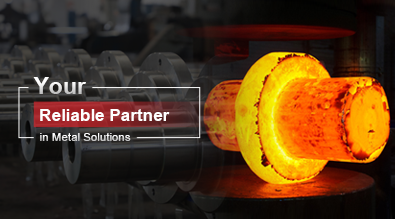
Die Vorteile 904L Edelstahl castings and forgings are a combination of high alloy content, low carbon, good corrosion resistance, and the ability to make components to suit severe process settings. 904L is a high-nickel, high-molybdenum austenitic stainless steel also known as UNS N08904 and EN 1.4539. 904L was created for service in situations where traditional grades such as 304L and 316L cannot provide enough resistance to harsh chemical environments. It is particularly well proven in chemical processing, petrochemical equipment, seawater handling, heat exchangers, pulp and paper processing, hydrometallurgy, and other corrosive service conditions. However, the value of 904L stainless steel is not just its alloy composition for component producers and industrial purchasers. The route of manufacture matters, too. Forging may be beneficial for components that require directional working and a reasonably delicate internal structure, but casting may give more opportunity to create complicated shapes and integrated geometries. Therefore, the choice between the two methods should be based on component shape, loading conditions, corrosion exposure, dimensional requirements, machining allowances, and appropriate material standards.
What Makes 904L Stainless Steel Different?
High Nickel, Molybdenum, Chromium, and Copper Content
One of the key reasons that 904L stainless steel performs well with regard to its corrosion resistance is its chemistry. The nominal chemistry is typical of about 20 percent chromium, 25 percent nickel, 4.5 percent molybdenum, and 1.5 percent copper, with carbon tightly controlled at a very low level. The actual requirements are product standard and production specification specific.
Chromium forms the basic passive coating associated with stainless steel, and molybdenum provides resistance to localized corrosion such as pitting and crevice corrosion. The high nickel content is beneficial for austenite stabilization and is also beneficial for ductility and chloride stress corrosion cracking resistance. Copper is particularly critical when the alloy is used in specific reducing acid conditions, including sulphuric acid service.
This combination is what sets 904L apart from standard 18-8 austenitic stainless steels. The grade is not only meant to provide a greater strength level. Its primary advantage is that it can provide good corrosion resistance in settings where a lower-alloy stainless steel might require more frequent replacement or might not be acceptable at all. Outokumpu 904L is listed for process equipment, petrochemical applications, seawater handling, desalination, hydrometallurgy, heat exchangers, and other demanding applications.
Mechanische und physikalische Eigenschaften
The mechanical properties of 904L stainless steel are product form, heat treatment, thickness, the applicable specification, and technical papers. Always check these documents against the actual grade and delivery condition.
For example, Alleima claims that solution-annealed 904L billet can have a minimum 0.2% proof strength of 230 MPa, a tensile strength of 530–720 MPa, an elongation of at least 40%, and a hardness of no more than 230 HB. Another example is the product form of 904L, which has considerably different specified values and shows why generic mechanical-property numbers should not be transferred from one product category to another without examining the relevant standard.
Density is around 8.0 g/cm³, and the material is non-magnetic in its natural austenitic state. Its strength, ductility, and toughness are combined to make it excellent for components that have to sustain mechanical loads and at the same time resist corrosion by process fluids.
Thus, buyers should ask for the actual material test findings for a final casting or forging, rather than depending on a broad grade description. Compare chemical composition, tensile characteristics, hardness, heat-treatment condition, and any supplemental nondestructive tests with purchase specification.
Why 904L Stainless Steel Works Well for Castings and Forgings?
The Advantages of 904L Stainless Steel Forgings
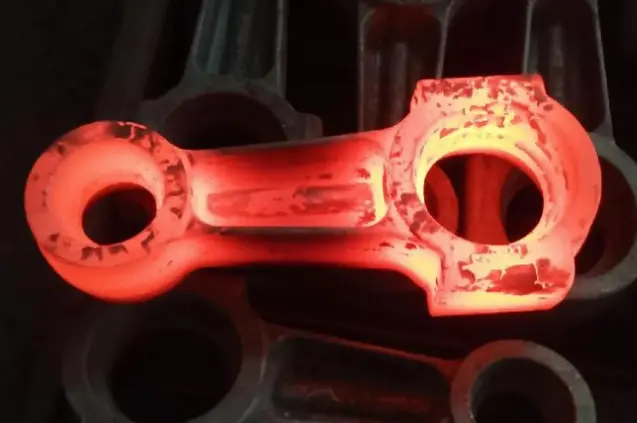
Forging is a valuable manufacturing process when a component needs a strong, designed shape and controlled grain flow. The process of forging is a plastic deformation of material at a controlled temperature and pressure. The maker can produce shafts, rings, flanges, valve components, pressure containment parts, and other geometries that benefit from a wrought structure.
Since 904L is a highly alloyed alloy requiring suitable techniques of hot-working and heat treatment, the forging process has to be carefully managed. Alleima advocates hot working within a predetermined temperature range and rapid cooling thereafter, followed by proper solution annealing when required. The 904L billet data also shows solution annealing at around 1050-1150°C with water quenching for the mentioned material.
One key advantage of a forged part is that the manufacturing process can be selected to suit the actual load path. A well-designed forging offers a good balance of mechanical integrity and corrosion resistance for a component undergoing frequent mechanical loads, pressure, or large section changes.
Procurement also requires the specification to be applicable. Specification for Forged or Rolled Alloy and Stainless Steel Flanges, Forged Fittings, Valves, and Parts for High-Temperature Service 1.2.1 ASTM A182/A182M If a certain 904L forging grade or standard is specified in the order, the supplier should check the exact designation, heat treatment, testing requirements, and dimensional requirements before production is started.
The Role of 904L Stainless Steel Castings
Casting has a separate manufacturing benefit. Instead of beginning with a billet and mechanically manipulating it into shape, molten metal is poured into a mold built around the final component geometry. This can be useful for large or intricate components where machining the whole shape from wrought stock would cause a lot of material waste or involve a lot of manufacturing steps.
Therefore, 904L castings may be considered where a component comprises intricate passages, integrated parts, irregular exterior geometry, or other aspects that make forging less viable. Typical examples may include selected pump, valve, chemical processing, and equipment components, provided that the foundry has adequate experience with the alloy and corresponding casting specification.
The crucial thing is that one should not instantly treat a casting as the same as a forging just because it is the same nominal alloy. The last component is affected by solidification behavior, section thickness, shrinkage, inclusions, porosity, heat treatment, and inspection needs. These elements should be included in a quality specification rather than depending just on the name of the material.
Corrosion Resistance Is the Main Engineering Advantage
Resistance to Pitting, Crevice Corrosion, and Chlorides
The reason for picking 904L stainless steel is usually its corrosion resistance rather than its particularly high tensile strength. The comparatively high levels of chromium and molybdenum confer enhanced resistance to localized corrosion compared to normal austenitic grades. 904L is specifically characterized by Alleima as having excellent pitting resistance in neutral chloride-bearing solutions and substantially greater crevice-corrosion resistance than variants ASTM 304 and 316.
This can be relevant in seawater handling equipment, heat exchangers, desalination, and process equipment exposed to chloride-bearing water. Actual performance is still dependent on temperature, chloride content, oxygen conditions, surface condition, crevice shape, and other variables. Never choose stainless steel only because a grade has a high nominal corrosion-resistance rating.
Performance in Acidic Process Environments
The additions of copper and molybdenum also have some beneficial effects on the grade in some acidic situations. 904L is commonly utilized in chemical and petrochemical equipment handling particular sulphuric acid conditions. Technical documentation also mentions phosphoric and acetic acid applications.
This does not indicate that 904L is resistant to all acid concentrations and temperatures. But in fact, the hotter or more chemically active the process is, the more critical the choice of materials becomes. A process engineer should assess the actual fluid composition and concentration, the operating temperature, pressure, impurities, and flow conditions before authorizing the alloy.
That difference adds value to a 904L component specification. Instead of declaring "high corrosion resistance," the purchasing document may specify the service medium and demand the producer verify the appropriateness of the material.
Beständigkeit gegen chloridinduzierte Spannungsrisskorrosion
Certain levels of tensile stress, chloride concentration, and temperature can make austenitic stainless steels susceptible to chloride stress corrosion cracking. The resistance of high-alloy austenitic grades like 904L is improved by significant nickel and molybdenum alloying additions. Outokumpu notably highlights 904L as having outstanding resistance to chloride-induced stress corrosion cracking compared to typical austenitic grades.
This property is of interest in the design of components in hot chloride-bearing environments. However, resistance to stress corrosion cracking is not a guarantee. Welding condition, residual stress, surface contaminants, geometry, and operational environment of 904L Edelstahl, however, still need to be managed.
Where 904L Castings and Forgings Are Used?
Chemische und petrochemische Verarbeitung
One of the longest established areas of application for 904L is chemical processing. Equipment may be exposed to acidic process streams, chloride-containing fluids, and other corrosive media that set more demanding requirements on the materials than general-purpose stainless steel can satisfy.
Components can include valves, pumps, heat exchanger components, flanges, fittings, and other designed elements. The choice of casting, forging, machining, or a combination of these depends on the precise design of the component.
Seawater, Desalination, and Heat Exchangers
Seawater and desalination equipment, including 904L Edelstahl components, are exposed to a combination of chloride exposure, temperature change, and flow-related corrosion issues. Outokumpu lists 904L for seawater handling and desalination. Alleima lists seawater cooling and heat-exchanger service with chloride contamination.
For these applications, component design must take into account more than bulk alloy chemistry. Crevices, deposits, surface roughness, stagnant zones, galvanic contact with dissimilar materials, etc. can all affect corrosion behavior in the real world.
Pulp, Paper, Hydrometallurgy, and Process Equipment
The alloy also finds application in the pulp and paper industry, in hydrometallurgy, in the food industry, and anywhere corrosion-resistant process components are required.
This wide range of applications is one of the reasons why 904L is ideal for bespoke castings and forgings. The production path can be tailored to the geometry by the component maker while maintaining the corrosion-resistant qualities of the specified alloy.
904L Stainless Steel Compared With Other Materials
904L Versus 316L
The most common comparison is between 904L and 316L. Both are austenitic stainless steels, but 904L contains substantially more nickel and molybdenum and also includes copper. These additions give 904L stronger resistance to several aggressive corrosive environments, especially where pitting, crevice corrosion, chloride exposure, or acidic conditions are important.
316L remains appropriate for many general industrial applications, so replacing it with 904L should not be treated as an automatic upgrade. The additional alloying content increases material cost, and the benefit is greatest when the service environment actually requires the additional corrosion resistance.
904L Versus Duplex Stainless Steel
Duplex stainless steels can provide higher mechanical strength than conventional austenitic grades and can be attractive when weight reduction or pressure containment is a major design consideration. 904L instead offers a highly alloyed austenitic structure with excellent ductility and strong corrosion resistance in selected acidic and chloride environments.
The correct comparison therefore depends on the service environment and the design objective. If the primary concern is high strength, a duplex grade may deserve consideration. If a combination of austenitic toughness, ductility, and corrosion resistance in a particular chemical environment is required, 904L may be considered alongside other corrosion-resistant alloys.
904L Versus Nickel-Based Alloys
Nickel-based alloys and 904L stainless steel can provide substantially greater resistance in some highly aggressive chemical and high-temperature environments. However, they can also involve significantly higher material costs.
904L occupies an intermediate position for many applications. It provides considerably more corrosion resistance than common stainless grades while retaining the manufacturing characteristics of an austenitic stainless steel. The final selection should be based on the actual process environment rather than on material price alone.
How to Specify High-Quality 904L Castings and Forgings
Confirm the Exact Material Standard
A reliable purchase specification should identify the material designation, product form, applicable ASTM/ASME or EN standard, heat-treatment condition, dimensional requirements, and testing requirements.
For example, 904L is identified as UNS N08904 and EN 1.4539, while ASTM A182 provides requirements relevant to forged or rolled stainless steel flanges, fittings, valves, and related components.
The exact standard should always match the intended product form. A buyer should not assume that a specification written for plate, billet, pipe, or forging automatically covers a casting.
Review Material Traceability and Test Documentation
For critical industrial components, traceability is an important part of supplier qualification. The supplier should be able to identify the material heat and provide appropriate documentation for chemical composition and mechanical testing.
Depending on the application, buyers may also request dimensional inspection, hardness testing, positive material identification, surface examination, ultrasonic testing, radiographic testing, or other nondestructive examination. The required inspection method should be established before manufacturing rather than added after a component has already been produced.
Evaluate the Manufacturing Route Before Ordering
The choice between casting and forging should be made during component engineering, not simply during purchasing.
A forging may be appropriate when the component requires a strong wrought structure, controlled geometry, and a defined load path. A casting may be more practical when the component has complicated geometry or when producing the shape through forging would involve excessive machining or multiple manufacturing stages.
This decision can affect tooling, machining allowance, production lead time, inspection requirements, and final component cost. A supplier with experience in both manufacturing routes can therefore provide useful input before the purchase order is finalized.
Fazit
Die Vorteile 904L Edelstahl castings and forgings come primarily from the alloy's high nickel, molybdenum, chromium, and copper content, combined with its low carbon level and austenitic structure. These characteristics give the grade strong resistance to pitting, crevice corrosion, selected acidic environments, and chloride-induced stress corrosion cracking, making it an established material for demanding chemical, petrochemical, seawater, desalination, heat-exchanger, and process applications. The manufacturing route is equally important. Forging can provide a practical solution for components requiring a wrought structure and controlled mechanical performance, while casting can simplify the production of complex geometries. Neither process should be selected independently of the component's service conditions, geometry, applicable standard, and inspection requirements. For buyers, the most reliable approach is to specify the exact 904L grade designation and product form, confirm heat treatment and mechanical requirements, establish material traceability, and define inspection requirements before production. Working with a supplier that can combine engineering support, controlled manufacturing, testing, and documentation can make the procurement process more predictable and help ensure that the finished component is suitable for its intended service environment.
FAQ
1: What is 904L stainless steel used for?
904L is commonly used in chemical and petrochemical process equipment, seawater handling, desalination, heat exchangers, pulp and paper processing, hydrometallurgy, and other applications where corrosion resistance is an important design requirement.
2: Why choose 904L instead of 316L?
904L contains substantially higher nickel and molybdenum levels than 316L and also contains copper. This alloying system gives 904L better resistance to several aggressive environments, including localized corrosion and selected acidic conditions. However, 904L is more highly alloyed and should be selected when the additional corrosion resistance provides a practical engineering benefit rather than simply being treated as a universal replacement for 316L.
3: Is 904L suitable for forging?
Yes. 904L is available in wrought product forms and can be supplied as forging stock and forged components under appropriate specifications. Alleima identifies its 904L billet material as suitable for production of components such as flanges according to ASTM A182 Grade F904L, with controlled hot working and solution-annealing practices.
4: When should a 904L component be cast instead of forged?
Casting can be considered when the component has a complex geometry that would be difficult or inefficient to produce through forging and machining. Forging is often more attractive for components where the manufacturing route, section geometry, and mechanical loading benefit from a wrought product. The decision should be made from the component drawing, service conditions, production volume, and applicable standard.
Kontaktieren Sie Welong für Ihre Fertigungsanforderungen aus Edelstahl 904L.
Welong provides customized metal-product manufacturing and supply-chain services for industrial customers requiring components made to drawings, samples, and defined technical specifications. For 904L stainless steel castings and forgings, the manufacturing process can be developed around the component geometry, service environment, required material documentation, machining requirements, and inspection plan. For a new project, customers can provide the component drawing, material designation, dimensions, operating medium, temperature, pressure, quantity, and applicable standard. These details allow the manufacturing route to be evaluated before production and help establish the appropriate requirements for material verification, heat treatment, machining, inspection, and final documentation. Contact us at info@welongpost.com um Ihre zu besprechen 904L Edelstahl Anforderungen an Ihre Lieferanten und erfahren Sie, wie unsere bewährten Fertigungskompetenzen die Leistung und Zuverlässigkeit Ihrer Produkte verbessern können.
Referenzen
1. ASM International Handbook Committee. „Eigenschaften und Auswahl: Eisen, Stähle und Hochleistungslegierungen.“ ASM Handbook Band 1, 10. Auflage, 1990.
2. Gedge, Graham. „Konstruktive Anwendungen von Edelstahl – Hochbau und Tiefbau.“ Journal of Constructional Steel Research, Band 64, 2008.
3. Kotecki, Damian J. „Wärmebehandlung von Edelstahlgussteilen und Schweißkonstruktionen.“ Welding Research Supplement, American Welding Society, 1992.
4. Peckner, Donald und Bernstein, IM „Handbook of Stainless Steels“. McGraw-Hill Book Company, New York, 1977.
5. Sedriks, A. John. „Korrosion von Edelstählen, Zweite Auflage.“ John Wiley & Sons, Inc., New York, 1996.
6. Woollin, P. und Gregori, A. „Vermeidung von Wasserstoffversprödung und Spannungsrisskorrosion bei ferritisch-austenitischen Edelstählen unter kathodischem Schutz.“ Konferenzbeiträge der Eurocorr 2004, Nizza, Frankreich.